How Marketing Teams Can Collaborate on Social Without the Chaos
Approvals, roles, and review workflows that keep multiple people moving fast on social content without stepping on each other.
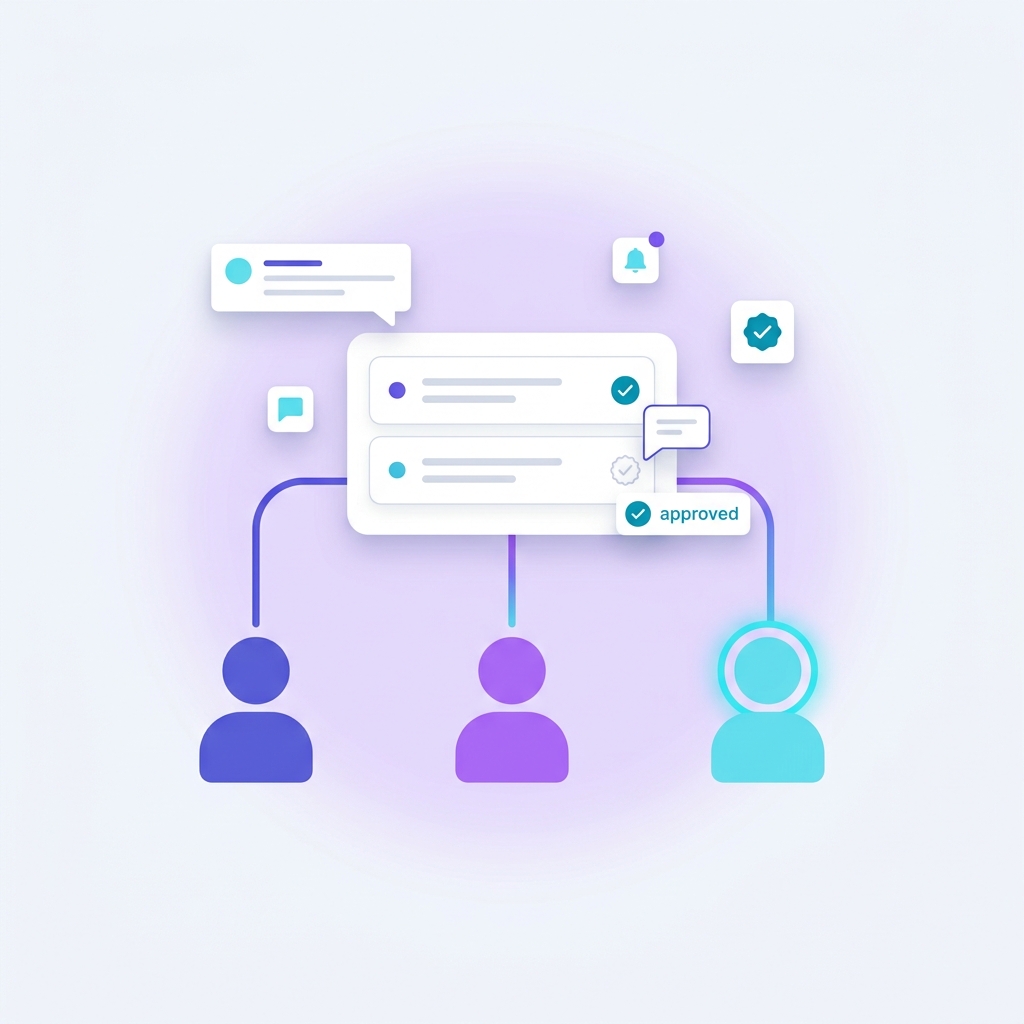
The moment more than one person touches your social media, things get messy. Two people post the same idea, a typo slips through because nobody reviewed it, or a campaign stalls because everyone assumed someone else hit publish. None of this is a people problem. It's a workflow problem, and workflows are fixable.
Define roles before you define tasks
Most chaos comes from unclear ownership. Decide who creates, who reviews, who approves, and who publishes, and make those roles explicit rather than implied. A small team might combine roles, but even then, naming them prevents the "I thought you had it" gaps that kill momentum.
Use a single source of truth
Drafts scattered across chat threads, spreadsheets, and inboxes guarantee version confusion. Keep every post in one shared workspace where the draft, its visual, its schedule, and its status all live together. When everyone looks at the same board, nobody works off a stale copy.
Build a lightweight approval step
Approval shouldn't mean a week of waiting. The goal is one clear checkpoint where a reviewer can catch errors and confirm the message is on-brand before anything goes live. Keep it fast: a single approver, a clear yes or no, and a comment field for changes. Heavy multi-stage sign-off is where good content goes to die.
Make status visible at a glance
Everyone should be able to see, in seconds, what's in draft, what's awaiting review, what's approved, and what's scheduled. Visible status is what lets a team move quickly without constant check-in messages. It also surfaces bottlenecks early, so you can see when posts are piling up at the review stage.
Write down your standards once
A short, shared style guide covering tone, hashtag rules, banned phrases, and image specs removes a huge amount of back-and-forth. Instead of debating the same questions every week, the team points to the guide and keeps moving. Update it when something new comes up, and treat it as living documentation.
Review the process, not just the posts
Once a month, ask the team where things felt slow or unclear. The best collaboration systems aren't designed once and frozen. They're tuned continuously based on where the friction actually shows up.